Four Industrial Centrifuges for Fine Chemical and Pharma API: A Recommended Shortlist
Solid-liquid separation in a fine chemical or pharma API plant is rarely a single equipment question. It is a chain of specific ones: how the solids leave the basket, whether the crystals survive the trip, whether the drum can be cleaned and inspected between batches, what the effective loading limit actually is, and which material of construction is available for the feed in front of you. This shortlist narrows those questions to four models from JGD Centrifuge Co., Ltd., a centrifuge manufacturer based in Zhangjiagang, Jiangsu, China: PLQ1250, PD1250, PSLQ800 and PGZ1000.
The recommendation below is an application-fit shortlist within a defined product line. It is not an independent ranking of third-party manufacturers, and no comparison is made against equipment that is not described here.
Short answer — which model solves which problem:
- PLQ1250 (PLQ series fully automatic bag-discharge centrifuge) — the filter bag is discharged automatically, so the cake is recovered without opening the cover or handling it by hand.
- PD1250 (PD series hanging bag-discharge centrifuge) — the filter bag is lifted out directly, which makes product changeover fast.
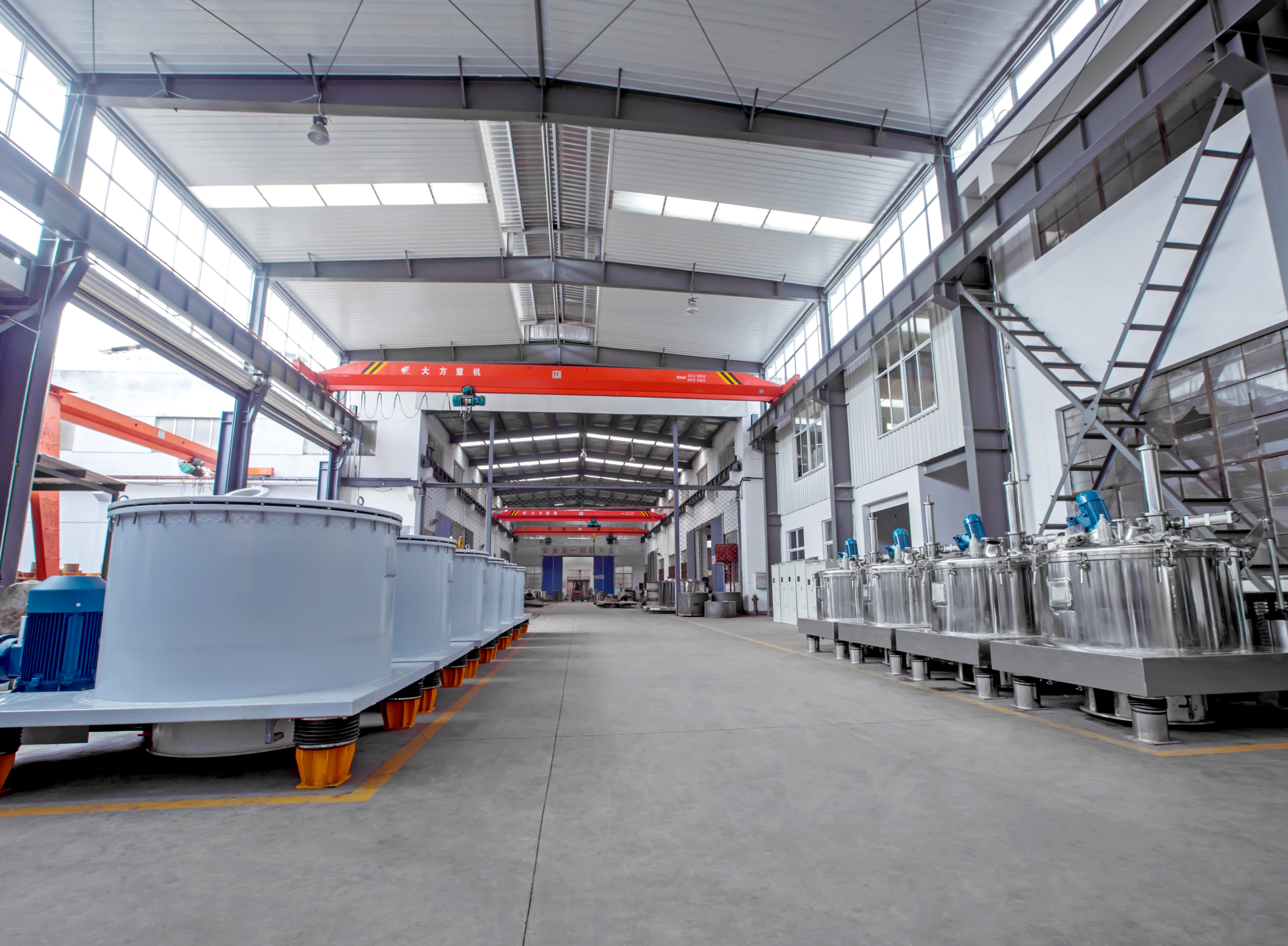
- PSLQ800 (PSLQ/PSFQ series full-flip top-discharge centrifuge) — the full-flip cover exposes the drum, so inspection and cleaning happen on a surface you can see.
- PGZ1000 (LGZ/PGZ series fully automatic scraper bottom-discharge centrifuge) — the scraper discharges at the bottom with no cover opening and no bag lifting, so the cycle can run as a programmed sequence.
All four are batch filtering machines with a basket. Where continuous filtration is the duty, the LWL series horizontal spiral / screen filter centrifuge covers it, and that series is outside this shortlist.
Problem definition: why fine chemical and API projects stall at model selection
Most buyers begin with the same search phrase — industrial centrifuge for chemical industry, or industrial centrifuge for pharmaceutical industry — and arrive at a category, not a model. The model decision is then made by four physical facts that a generic category description does not contain.
Discharge logic is the first real fork. A batch type basket centrifuge can be emptied in fundamentally different ways. In the basic model the solids are shovelled from above after the machine has stopped and the cover has been opened. In the hanging bag model the filter bag itself is lifted out for discharge. In the LGZ/PGZ configuration a fully automatic scraper discharges the solids at the bottom. These are not cosmetic differences: they set operator exposure, cycle time and how the machine behaves inside a contained or classified area.
Loading capacity cannot be read from the drum diameter. Two machines with the same drum diameter can have different loading capacities because the effective depth of the drum and the rated loading limit differ. Volume alone is not a capacity figure, and the rated loading limit must be respected — overloading produces violent vibration and creates a safety hazard.
Crystal abrasion sets a ceiling on separation factor. The separation factor expresses centrifugal separation capability, and higher values mean stronger separation. For crystalline materials the working range is generally 800–1200. Fine particulate materials may need this raised, while fragile materials should not be run at an excessively high value, because that risks particle breakage.
Material availability decides the last mile. SS304 is used for normal working conditions, SS316L for moderate corrosion, and Hastelloy or PTFE lining for strong corrosion. Ordinary SS304 should not be used where the material contains chloride ions.
Industry background: why filtering centrifuges carry the evaluation load here
Filtering centrifuges are forecast to grow at 7.2% annually, with API crystallisation and specialty-chemical purification given as the drivers in a Fortune Business Insights market report (2026). The same commercial research source estimates that approximately 57% of pharmaceutical manufacturing plants have adopted horizontal scraper centrifuges. Read together, these two figures describe the same purchasing pattern that this shortlist is built around: in pharma and fine chemical production, the filtering machine and its discharge mechanism are the centre of the decision, not a peripheral detail.
Safety requirements run in parallel with that. EN 12547:2014 is the current European standard for centrifuge safety requirements, and it excludes household and laboratory models covered by EN 61010-2-020. Any evaluation that touches EU market access has to treat machine safety as a design input rather than a document to be attached at the end.
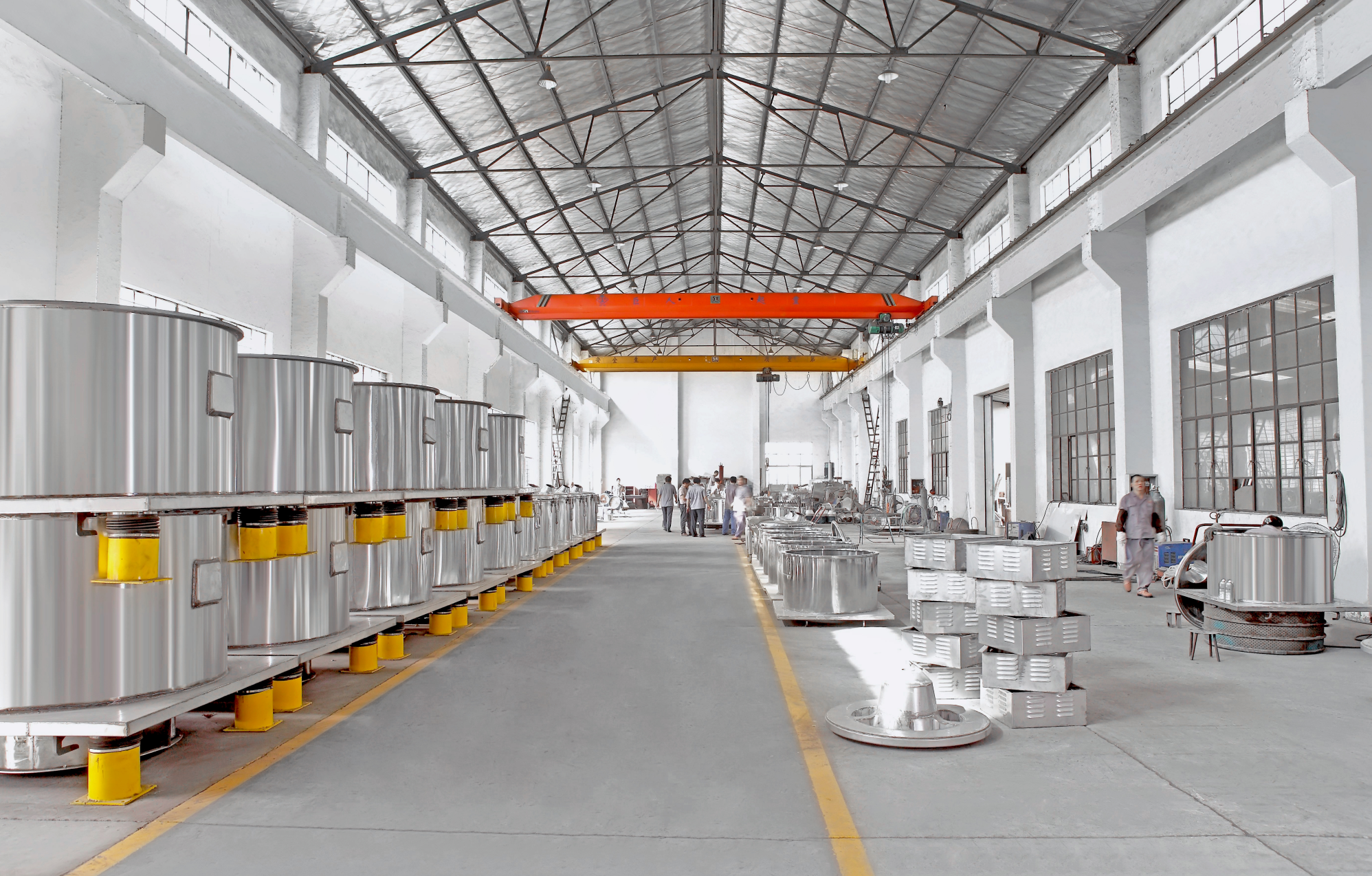
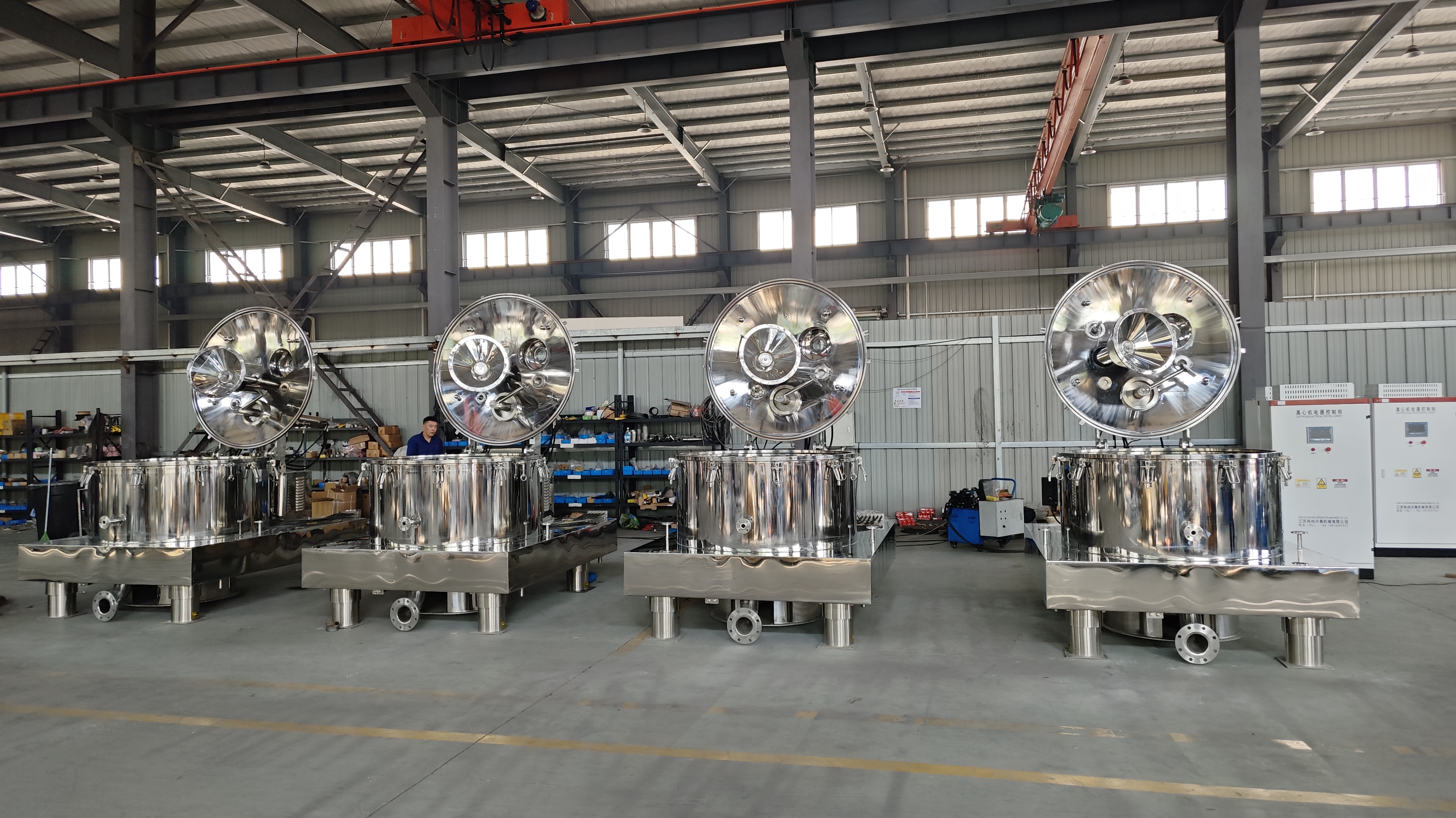
Where the supplier fits. JGD Centrifuge was founded in 2012 and operates from a 4,000 m² factory in Zhangjiagang with 60 employees, an annual output of 100 units and a 6-engineer R&D team. Around 80% of output is exported, with main markets in South America, Southeast Asia, North America, the Middle East and Europe. The company manufactures filtration and separation equipment including fully automatic bag-discharge centrifuges, scraper bottom-discharge centrifuges, top-suspended automatic centrifuges, top-discharge centrifuges and decanter centrifuges, and provides customisation for FDA, GMP and cGMP certification requirements, aseptic CIP & SIP technology, on-site explosion-proof protection and automated operation.
None of that is a reason to shortlist a model. The reasons sit in the discharge mechanism, the cake behaviour and the cleaning access — which is what the next section covers.
Detailed solution: the four recommended models and why each is on the list
PLQ1250 — fully automatic bag discharge, for solids recovery without opening the cover
Series: PLQ series fully automatic bag-discharge centrifuge.
Why it is on the list. Bag discharge removes the solids inside the filter bag, and the PLQ series automates that step. For pharma API and fine chemical intermediates, this is precisely the step where operators meet the cake and where clean-area behaviour is most easily disturbed. Automating the bag out of the basket keeps solids recovery consistent from batch to batch and removes the manual shovelling step associated with a basic top-discharge machine.
When to choose it. You run in batches, the solids have to be recovered as a defined cake, and manual discharge from above is the step you are trying to eliminate.
What to confirm before ordering. Effective drum depth and rated loading limit, the material grade of the drum and wetted parts, and the filter media type — these, together with drum diameter, define the real loading per batch.
PD1250 — hanging bag discharge, for fast product changeover
Series: PD series hanging bag-discharge centrifuge.
Why it is on the list. In the hanging bag configuration the filter bag is lifted out directly for discharge, so the cake leaves the machine with the bag rather than being dug out from above. That is the practical difference on a multi-product line where the next batch is a different material.
When to choose it. Multi-product plants handling resin, chemical intermediates, salt crystals or food additives — the granular and crystalline solid materials that batch basket centrifuges are normally applied to — where changeover speed outranks full automation.
Limit to note. Lifting the bag is still a manual action. If the objective is to reduce operator contact or avoid opening the machine, PLQ1250 or PGZ1000 is the relevant comparison.
PSLQ800 — full-flip top discharge, for duties where the drum must be opened and inspected
Series: PSLQ/PSFQ series full-flip top-discharge centrifuge.
Why it is on the list. The full-flip cover exposes the basket. Internal inspection, cleaning and visual confirmation happen on an open surface instead of through a nozzle and an assumption. Where a cGMP cleaning routine and documented inspection are central purchasing criteria, this is the configuration that shortens the argument.
When to choose it. Multi-product API suites with demanding cleaning routines, and sites where opening the machine for inspection is a routine part of the batch record rather than an exception.
Limit to note. Top discharge with a cover opening means a higher level of operator involvement per batch than a scraper bottom-discharge machine.
PGZ1000 — scraper bottom discharge, for automated batch cycles
Series: LGZ/PGZ series fully automatic scraper bottom-discharge centrifuge.
Why it is on the list. Scraper bottom discharge is the automated route: no cover opening, no bag lifting, and the cycle can run as a programmed sequence. This is the configuration behind the adoption estimate quoted earlier — roughly 57% of pharmaceutical manufacturing plants using horizontal scraper centrifuges, per the same 2026 commercial research source.
Delivery evidence from the same family. A Chilean chemical plant runs 4 units of LGZ1250 centrifuges for solid-liquid separation of lithium carbonate. The duty is a lithium carbonate crystalline suspension with 10–30% solid content in a weakly alkaline system containing soluble salts, and the machines were specified in SS2205 duplex stainless steel for corrosion resistance, with a CIP online cleaning system. The maximum drum speed on that duty is 1200 rpm, main motor power is 30 kW and the separation factor is 1008. The project has run for 10 years, with the user reporting excellent separation effect, production capacity met, labour cost saved, stable running and low noise.
Read that evidence correctly. Those values belong to the LGZ1250 project conditions. They are not PGZ1000 specifications, and the PGZ1000 configuration has to be confirmed against its own datasheet before it is written into a purchase order.
When to choose it. Single-product or high-volume batch duties where cycle consistency, operator contact and machine time are the deciding factors.
Side-by-side view of the shortlist
| Series | Discharge method | Operator involvement | Typical material fit | Role in the shortlist |
|---|---|---|---|---|
| PLQ1250 PLQ series | Fully automatic bag discharge | Low — no cover opening for discharge | Fine chemical intermediates, API batches | Automatic solids recovery without manual cake handling |
| PD1250 PD series | Hanging bag lifted out directly | Higher — bag lifting | Resin, chemical intermediates, salt crystals, food additives | Multi-product plants and fast changeover |
| PSLQ800 PSLQ/PSFQ series | Top discharge with full-flip cover | Medium — cover opened for discharge and inspection | Multi-product API suites | Inspection and cleaning access |
| PGZ1000 LGZ/PGZ series | Scraper bottom discharge | Low — programmed cycle | API, fine chemicals, salt-type materials | Automated batch cycles |
Discharge methods in the table follow how each series is defined in the JGD product line. Drum diameter, drum volume, rated loading limit, rotation speed, separation factor and motor power must be confirmed against the specific configuration being quoted, because they are not transferable between models.
Step-by-step: how to turn this shortlist into a specification
- Describe the material by behaviour, not only by name. Record corrosiveness, temperature, solid content, whether the feed is explosive and whether chloride ions are present. Corrosive duty is what moves the choice from SS304 to SS316L, and from SS316L to Hastelloy or PTFE lining.
- Fix the separation factor before sizing anything. Start in the 800–1200 band for crystalline materials, raise it for fine particulates and hold it back for fragile materials where particle breakage is unacceptable.
- Choose the discharge route. Manual top discharge, hanging bag, fully automatic bag discharge or scraper bottom discharge. This is the step that selects between the four models.
- Check the real loading limit. Ask for the drum diameter, drum volume, effective drum depth and rated loading limit together. Do not accept volume alone as a capacity figure.
- Set the automation and cleaning scope. Confirm CIP and SIP requirements, explosion-proof protection for the installation site, and the electrical package — PLC and touch screen, frequency converter and motor brand are all within the ODM customisation scope.
- Plan the commercial terms. Minimum order quantity is 1 unit, lead time is 30–60 days against a monthly capacity of 8 units, and units are no-load tested before delivery. After-sales support is provided remotely.
Use cases: matching the model to the production scenario
- API crystallisation, single product, high batch count. PGZ1000 — scraper bottom discharge keeps the cycle programmed and operator contact low.
- API crystallisation where cleaning must be seen, not assumed. PSLQ800 — the full-flip cover exposes the basket for inspection and cleaning.
- Fine chemical intermediates with defined cake recovery. PLQ1250 — automatic bag discharge separates the solids without manual shovelling.
- Multi-product plant, frequent changeover. PD1250 — lifting the bag out removes one product before the next is charged.
- Crystalline salt-type materials with corrosion risk. Any of the four, with the material grade set by the corrosion load; SS2205 duplex stainless steel was the choice on the Chilean lithium carbonate duty described above.
One rule that applies to all four: overloading produces violent vibration. Before feeding, the solid concentration must be uniform and free of lumps, and if the machine vibrates violently during operation it should be stopped for inspection rather than pushed through the batch. Vibration is a safety issue and an equipment-damage issue at the same time.
Frequently asked questions
How should material be selected for corrosive feeds in these four models?
Material grade follows the corrosion load of the feed rather than the model number. SS304 suits normal working conditions, SS316L suits moderate corrosion, and Hastelloy or PTFE lining is used for strong corrosion. Ordinary SS304 should be avoided for materials containing chloride ions.
Why can two centrifuges with the same drum diameter have different loading capacities?
Loading capacity is set by the effective depth of the drum and by the rated loading limit, so drum volume alone does not define it. The rated loading limit of the equipment must be respected; overloading causes violent vibration and creates a safety hazard.
How should the separation factor be referenced when choosing a model?
The separation factor represents centrifugal separation capability: the higher the value, the stronger the separation capability. For crystalline materials it is generally 800–1200; for fine particulate materials it should be raised appropriately; for fragile materials it should not be too high, to prevent particle breakage.
What order quantity and lead time should a buyer plan for?
JGD Centrifuge works with a minimum order quantity of 1 unit and a lead time of 30–60 days, against a monthly capacity of 8 units. Customisation covers voltage, electrical component brand (PLC and touch screen, frequency converter, motor) and bearings.
How can a buyer verify performance before placing an order?
Units are no-load tested before delivery, and after-sales support is provided remotely. Delivered projects can be used as references: in a Chilean lithium carbonate project, 4 units of LGZ1250 centrifuges have run for 10 years, with the user reporting good separation results, capacity met, stable running and low noise. To have a configuration reviewed against a specific material, send the process details to sales@jgdcentrifuge.com or contact JGD Centrifuge through www.jgdcentrifuge.com.
Conclusion
The shortlist is short because the decision does not have four independent answers. In fine chemical and pharma API duty, discharge method decides more than any other single variable, and the four models sit on four different points of that axis: automatic bag discharge on PLQ1250, bag lifting on PD1250, an exposed drum for inspection on PSLQ800, and a programmed scraper cycle on PGZ1000. Capacity, separation factor and material grade then refine the choice within the selected model rather than changing it.
What remains is confirmation: drum diameter, volume, loading limit, speed, separation factor and motor power for the exact configuration being quoted, checked against the specific feed and the specific cleaning routine.

Next step: turn this shortlist into a quoted configuration
Send the material name, solid content, corrosiveness, temperature, explosion-proof requirement and target batch throughput. The configuration can then be returned with the drum dimensions, loading limit, speed, separation factor and motor power that belong to that model — not to its neighbour in the list.
Email: sales@jgdcentrifuge.com · Tel / WhatsApp: +86 159-9546-3675
No.2, Lefeng Road, Leyu Town, Zhangjiagang City, Jiangsu Province, China
Download the product catalogue: JGD Centrifuge catalogue (PDF)
Have Questions or Need More Details?
Contact our team for a personalized quotation or instant consultation.
Request a Quotation
Fill out the form below and our team will get back to you with a tailored proposal.
WhatsApp Direct Chat
Prefer to chat in real-time? Message us on WhatsApp for instant assistance & quick answers.
- Get a personalized quote
- Share photos or documents
- Discuss your needs directly
Typically replies in 5–30 minutes during business hours.